

Whether you play on a team, run for fun, or just love being active, an injury to your foot or ankle can stop you in your tracks. The good news is that most sports injuries can be treated with conservative care and getting help early can make recovery easier. Here are the answers to the questions we hear most often.
What Are the Most Common Foot and Ankle Sports Injuries?
Ankle sprains: Stretched or torn ligaments, often from rolling the ankle
Plantar fasciitis and heel pain: Irritation of the tissue along the bottom of the foot or around the heel
Achilles tendon problems: Pain or stiffness at the back of the heel
Stress fractures: Tiny cracks in a bone from repeated impact
Shin splints: Pain along the front of the lower leg
Toe and nail injuries: Bruised nails, blisters, and jammed toes
Why Do Sports Injuries Happen?
Injuries usually happen when something puts more stress on the foot or ankle than it can handle. Common causes include:
Doing too much too soon, such as a sudden jump in distance or intensity
Worn-out or poorly fitting shoes
Uneven surfaces or hard playing surfaces
Foot structure, such as flat feet or high arches
Not enough warm-up, stretching, or recovery time
A past injury that never fully healed
How Are Sports Injuries Treated?
We always start with the most conservative options that make sense for you. Treatment may include:
Rest and a break from the activity that hurts
Ice and elevation to help with swelling
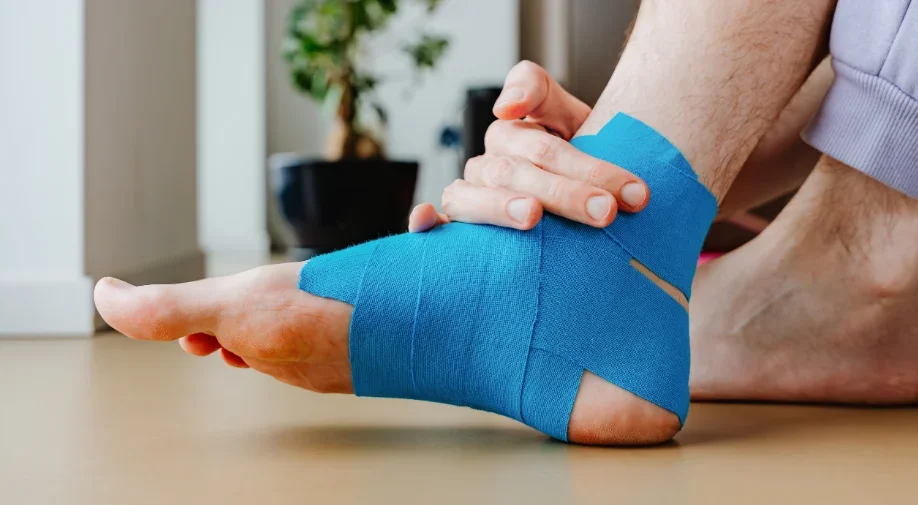
A brace, wrap, or walking boot for support
Stretching and strengthening exercises
Supportive shoes and custom orthotics
Physical therapy
Other in-office treatments when needed
Surgery isn't always the first step, and many injuries heal well without it.
How Can I Help Prevent Sports Injuries?
Wear shoes that fit well and are right for your sport
Replace worn-out athletic shoes
Warm up before you play and stretch afterward
Build up activity gradually
Listen to your body and rest when something hurts
Take care of small aches before they become big ones
When Should I See a Podiatrist?
It's time to come in if you can't put weight on your foot, if there is significant swelling or bruising, or if the pain is getting worse or lasting more than a few days. Come in too if you've had the same injury more than once, since repeated sprains or lingering pain can be a sign that something deeper needs attention.
We Treat You Like Family
At Utah Podiatry, we treat you like a family member, because your care should be personal. If a foot or ankle injury is keeping you on the sidelines, call today to schedule an appointment with our team. We're here to help you get back to what you love.